
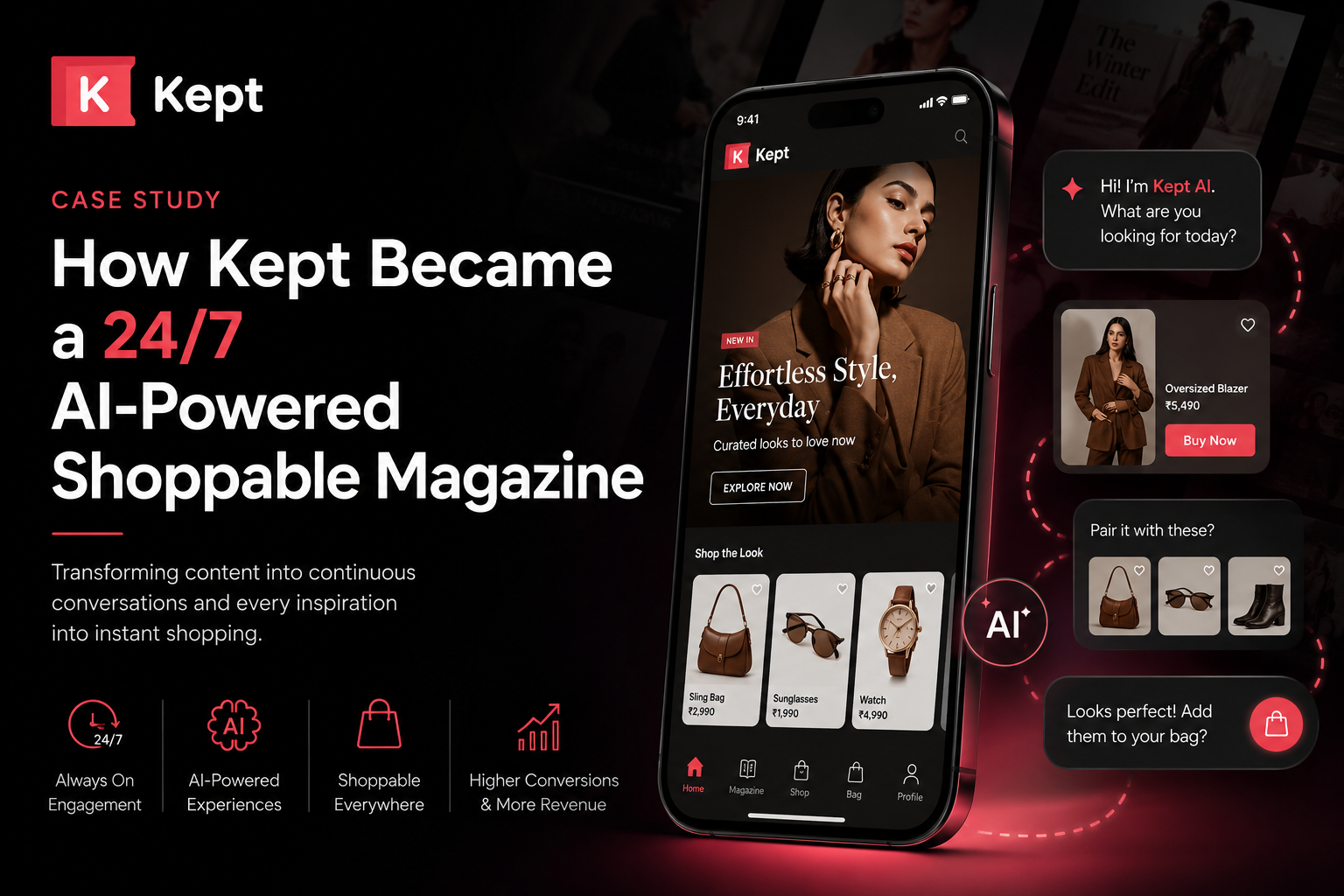
Kept Case Study
Kept is a fashion and beauty magazine-style brand built for the reader who wants to look and feel their best without being sold to. Their editorial covers quiet luxury capsule wardrobes, old money aesthetics, Sunday reset beauty routines, skincare fundamentals, and the kind of style advice that makes you feel like you have a knowledgeable friend in the industry.
That editorial positioning is powerful precisely because it doesn't feel commercial. Kept's readers trust the recommendations. They arrive with genuine purchase intent. Someone reading "The Quiet Luxury Wardrobe Capsule" isn't browsing, they're mentally building a cart.
And that is where the problem lived. The desire was there. The trust was earned. The transaction infrastructure was not. Readers finished articles, felt inspired, and then went to Google to find what they'd just been told about — where they became someone else's customer.
The old journey: article → inspiration → nowhere
Every additional step between reading and buying costs a brand roughly 30–50% of the remaining audience. The traditional path from a Kept article to a completed purchase had at least four of those steps. Here's what that looked like compared to the Kevo-powered journey:
The difference isn't cosmetic. Each removed step is a compounding gain — fewer decisions to make, less context to rebuild, less temptation to compare-shop elsewhere. The Kevo journey keeps the reader in Kept's world from discovery to purchase.
What Kevo built: four pages, one complete commerce system
Kevo constructed four interconnected pages for Kept — each with a distinct role in the buyer journey, each reinforcing the others. None of them required changing a single article on the Kept blog.
The GEO layer: four answer pages targeting AI search
The most architecturally significant part of the Kept build isn't the bio link or the AI chat. It's the four /ask/ pages — and specifically how they're structured. These pages don't target Google. They target answer engines: ChatGPT, Gemini, Claude, and Google's AI Overviews. This approach is called Generative Engine Optimization (GEO), and it's the most important shift in content discovery since SEO was invented.
When someone asks an AI "what's the best red lipstick for olive skin," the AI doesn't return ten blue links. It cites one or two authoritative sources and gives a direct answer. Kevo structures Kept's pages to be those cited sources — by matching the exact conversational query in the URL, opening with a direct expert answer, embedding full article schema, and keeping the entire purchase path self-contained on the page.
Why these pages get cited by AI, the technical anatomy
The shoppable layer: live products, real checkout
Each answer page isn't just editorial copy — it's a live storefront. Here's the product surface from two of the live Kept answer pages, synced directly with Shopify inventory.
The revenue architecture: AOV bundling built into the editorial
One of the most quietly powerful features of the Kept build is the natural bundle logic embedded in the skincare answer page. The page doesn't sell one product — it sells the complete routine. And it does so at a price point that makes individual purchasing feel like leaving money on the table.
The editorial framing does the selling. A reader who arrives for skincare advice — not to shop — is presented with a complete, logical routine at three natural price points. The three-step framework in the article (cleanse, moisturise, protect) maps perfectly to the three products on the page. One decision becomes three. And the contextual trust Kept has built makes the upsell feel like guidance, not a sales push.
The replication playbook: every article, an asset
Kept has published dozens of articles on high-intent topics — Sunday reset routines, old money aesthetics, wardrobe capsules, beginner beauty guides. Each one is a direct map to a GEO answer page. The build Kevo did for the first four pages isn't a one-off — it's a template that replicates across every piece of content Kept has published and every article they'll write in the future.
"Quiet Luxury Wardrobe Capsule" becomes "What are the essential pieces for a quiet luxury capsule wardrobe?" — the exact phrasing used in AI chat. That phrase becomes the URL slug and the opening question the page answers.
The page mirrors the authority of the original article, answers the question directly in the first two sentences, then surfaces 2–4 curated products at different price points — each with a direct Shopify buy link. No navigation required.
The editorial article links to the Kevo page for readers who want to shop. The Kevo page links back to the article for readers who want more context. The content and commerce reinforce each other — and both pages earn more organic visibility as a result.
Each live answer page earns AI search citations indefinitely. "How to build a skincare routine as a beginner" will be a relevant query in 2028 the same as today. One content investment; perpetual commercial return. No ad spend required.
What actually changed for Kept
What this proves for content-first brands
Kept didn't change what they write. They didn't add product reviews. They didn't compromise their editorial voice or start chasing affiliate programmes. They added the one layer that was always missing, the bridge between the trust they'd built and the transaction that trust should have been generating all along.
For any content brand, publisher, or creator with a real audience and genuine editorial authority, the Kept model answers a question that has historically had no clean answer: how do I monetise what I've built without becoming a store?
You don't become a store. You build the infrastructure that lets your readers buy, on their terms, in your voice, at the moment they're most ready. Kevo builds that infrastructure. And for Kept, it runs around the clock for less than the cost of a daily coffee.
Like what you’re reading?
Get the latest stories and announcements